
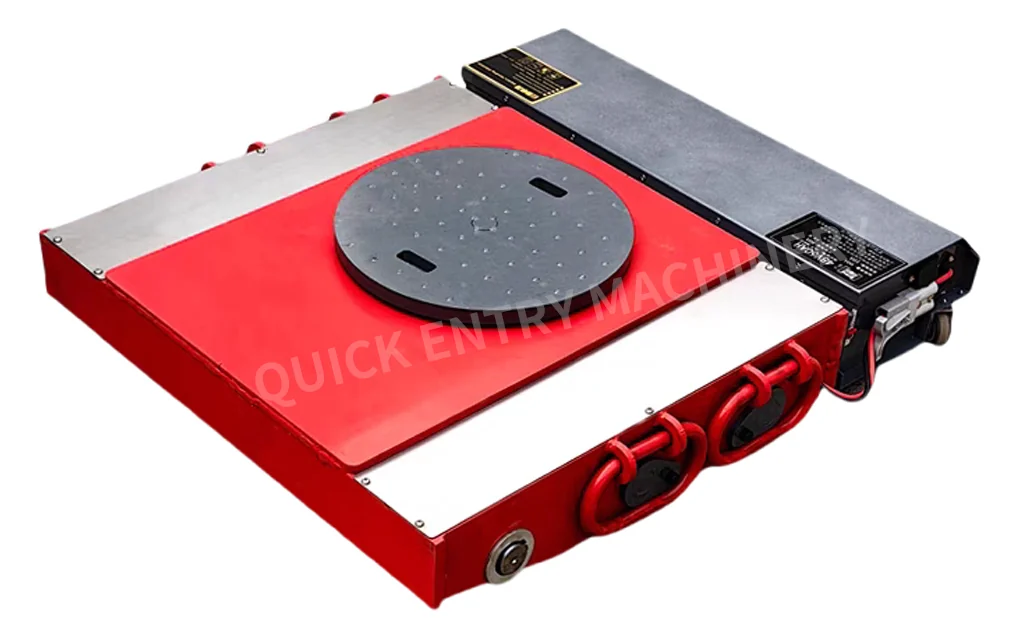
Heavy-load handling / Powered machinery skates
30T Towing Remote-Controlled Machinery Skate
Model30T series
Low-profile machinery skate with 30 t catalogue towing capacity and 25 t catalogue load capacity. Remote control, a rotating support platform and a 48 V / 60 Ah NMC battery support assessed machinery-moving projects.
- Catalogue towing capacity
- 30 t
- Catalogue load capacity
- 25 t
- Motor configuration
- 2,000 W
Product overview
30T Towing Remote-Controlled Machinery Skate
The 30T series is a remote-controlled machinery-moving skate, not a PV cleaning robot. Its catalogue identifies 30 t towing capacity separately from 25 t load capacity. The 2,000 W motor configuration, 48 V / 60 Ah NMC battery, reinforced gearbox and removable rotating turntable form a compact platform for equipment relocation and positioning. Share the load and route details before confirming a handling configuration.
Product features
Remote control for equipment positioning
Low-profile chassis and alloy gears
Metal electrical enclosure and reinforced gearbox
Rotating support turntable; confirm surface and structure for the selected configuration
Applications
Factory machinery relocation, subject to a site assessment
Warehouse heavy-load handling with a suitable support arrangement
Equipment installation and positioning after configuration review
Technical specifications
| Catalogue towing capacity | 30 t |
|---|---|
| Catalogue load capacity | 25 t |
| Motor configuration | 2,000 W |
| Operating current | 60 A |
| Dual-channel controller | D2T 200 A |
| Chassis steel | 12 mm Q355 manganese steel |
| Battery | 48 V / 60 Ah, lithium NMC |
| Remote control | C7 / C6 |
| Dimensions (L × W × H) | 740 × 640 × 185 mm |
| Drive wheels | 4 wheels; 90 × 135 mm |
| Gearbox | 120 custom reinforced gearbox |
| Gears | Luomengtai high-strength gears |
| Unit weight | 145 kg |
What to confirm before ordering
Towing capacity and load capacity describe different duties; they are not interchangeable.
Provide total equipment weight, centre of gravity and support points for selection.
Floor condition, gradient, route clearance and turning space must be assessed before confirming suitability.
Capacities of multiple units must not simply be added together; a coordinated handling arrangement requires assessment.
Product documents
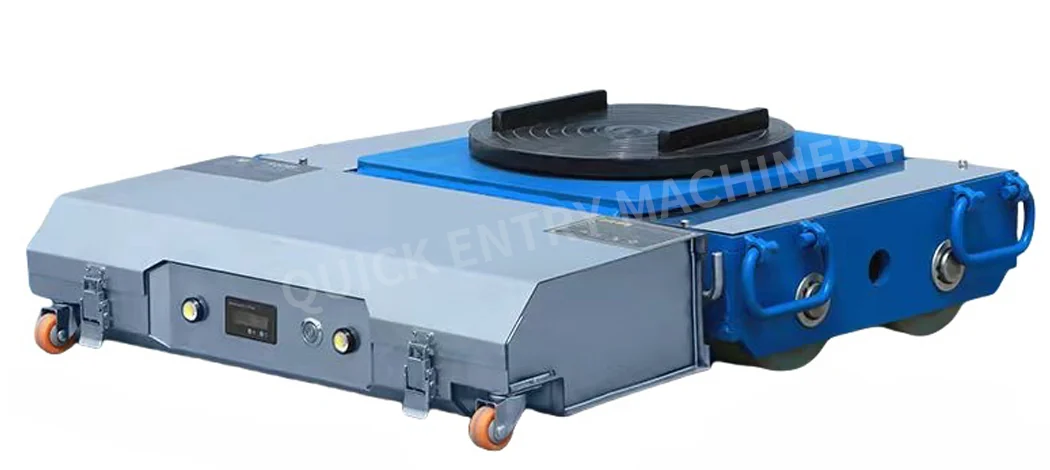
20T Towing Remote-Controlled Machinery Skate
Low-profile machinery skate with 20 t catalogue towing capacity and 15 t catalogue load capacity. Remote control, a rotating support platform and a 48 V / 60 Ah NMC battery support assessed machinery-moving projects.
- Catalogue towing capacity
- 20 t
- Catalogue load capacity
- 15 t
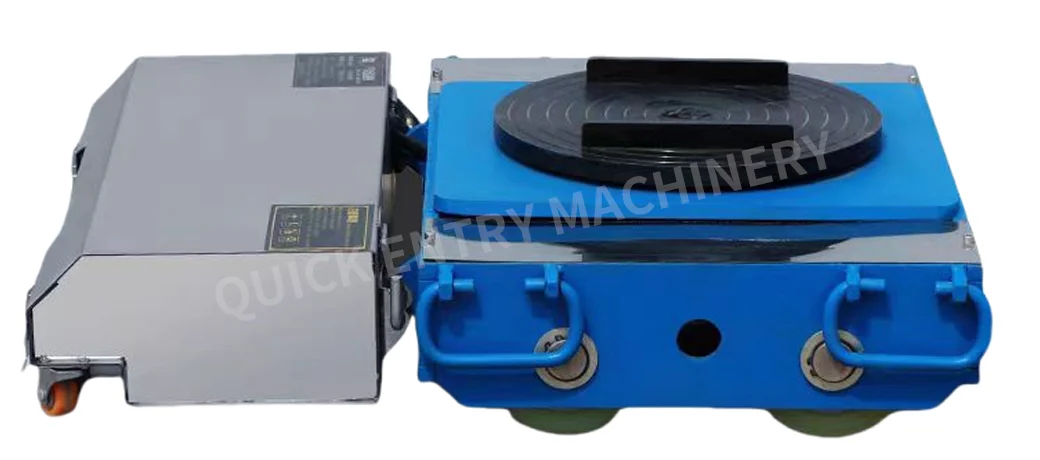
25T Towing Remote-Controlled Machinery Skate
Low-profile machinery skate with 25 t catalogue towing capacity and 20 t catalogue load capacity. Remote control, a rotating support platform and a 48 V / 60 Ah NMC battery support assessed machinery-moving projects.
- Catalogue towing capacity
- 25 t
- Catalogue load capacity
- 20 t
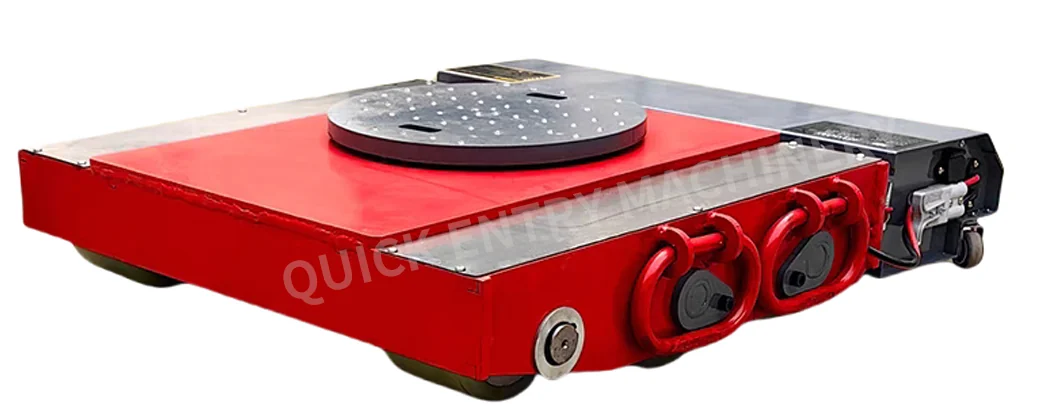
40T Towing Remote-Controlled Machinery Skate
Low-profile machinery skate with 40 t catalogue towing capacity and 20 t catalogue load capacity. Remote control, a rotating support platform and a 48 V / 120 Ah NMC battery support assessed machinery-moving projects.
- Catalogue towing capacity
- 40 t
- Catalogue load capacity
- 20 t